Terminal Blocks: Revolutionizing Electrical Connectivity

Terminal blocks serve as pivotal components in electrical systems, revolutionizing connectivity and streamlining wiring processes across various industries. From industrial automation to building wiring, these versatile blocks have become indispensable. Understanding their types, components, installation processes, and maintenance is crucial for optimal utilization.

Terminal Blocks

Terminal blocks, also known as connection terminals or terminal connectors, are fundamental components in electrical circuits. They serve as junction points for electrical wires, providing a secure and organized method for connecting different electrical components.

Types of Terminal Blocks

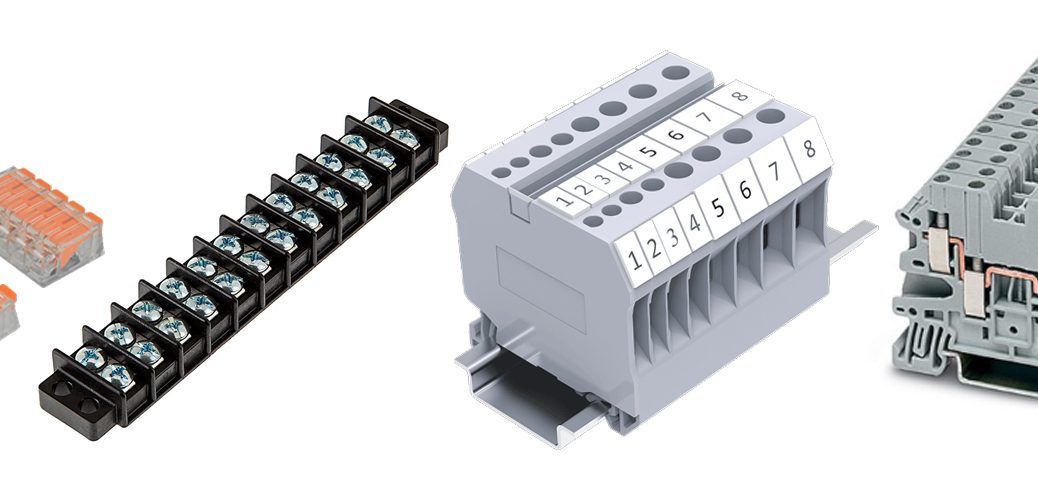
There are several types of terminal blocks tailored to specific applications. Barrier terminal blocks offer insulation and segregation between circuits, while DIN rail terminal blocks are commonly used in industrial settings for their easy installation on DIN rails. PCB terminal blocks are designed for printed circuit boards, and plug-in terminal blocks allow quick connections and disconnections.

Components and Structure

Terminal blocks typically consist of screw terminals or spring terminals, where wires are inserted and secured. The choice between these terminals often depends on the application and required ease of wiring. The structure includes insulation materials to prevent short circuits and various wiring options to accommodate different wire gauges and types.

Installation and Wiring Process

Installing terminal blocks involves a step-by-step process, from choosing the right block for the application to wiring techniques. Ensuring proper insulation, wire stripping, and secure connections is vital for efficient functionality and safety.

Advantages of Terminal Blocks

The versatility and flexibility of terminal blocks allow for easy modifications and additions to electrical systems. They facilitate straightforward maintenance and troubleshooting due to their organized structure. Safety features such as shock prevention and short-circuit protection add to their appeal.

Common Applications

Terminal blocks find extensive use in industrial automation for controlling machinery, power distribution systems, and building wiring for electrical fixtures. Their adaptability makes them suitable for various scenarios, contributing to efficient electrical setups.

Selecting the Right Terminal Block

Choosing the appropriate terminal block involves considering factors like voltage and current ratings, wire size compatibility, environmental conditions, and mounting options. Matching the requirements with the types available ensures optimal functionality.

Maintenance and Troubleshooting

Regular maintenance, including inspections and cleaning, prolongs the lifespan of terminal blocks. Understanding and addressing common issues like loose connections or insulation deterioration is crucial for uninterrupted operations.

Future Trends in Terminal Blocks

The evolution of terminal blocks involves technological advancements, including smart terminal blocks with integrated sensors or communication capabilities. Industry innovations aim to enhance efficiency and reliability in electrical systems.

Safety Regulations and Compliance

Adhering to safety standards and certifications is imperative in selecting and installing terminal blocks. Compliance with regulations ensures the safety of installations and reduces potential risks.

Environmental Impact

Manufacturers are increasingly focusing on sustainability efforts in terminal block production. From using eco-friendly materials to offering recycling options, minimizing environmental impact is becoming a priority in the industry.

Case Studies

Real-world examples demonstrate the effectiveness of terminal blocks across diverse applications, showcasing their role in enhancing efficiency and reliability in electrical systems.

Comparison with Alternatives

Terminal blocks offer advantages over traditional wiring methods, such as enhanced organization, easier maintenance, and adaptability to evolving electrical setups.

Tips for Efficient Use

Maximizing the benefits of terminal blocks involves proper installation, regular maintenance, and selecting the right type for specific applications. Efficient use ensures optimal performance and longevity.

Conclusion

Terminal blocks play a pivotal role in simplifying electrical connections across various industries. Their versatility, safety features, and adaptability make them indispensable components in modern electrical systems, ensuring efficient functionality and streamlined wiring processes.
Toggle Switches Simplifying Control in Everyday Devices

Imagine a world without toggle switches – those simple yet omnipresent devices that effortlessly control our electronics. From light switches to gaming consoles, these unassuming gadgets play a pivotal role in our daily lives. In this comprehensive guide, we’ll dive into all aspects of toggle switches, unraveling their significance, functionality, and diverse applications.

toggle swithes

1. Understanding Toggle Switches

What exactly is a toggle switch?
A toggle switch is a simple on/off control mechanism that operates by flipping a lever. It’s a fundamental component in electronic devices, facilitating manual control of electrical circuits.

Toggle switches might seem like mundane devices, but their role in our daily lives is far-reaching. From controlling lights in our homes to managing complex machinery in industries, these switches come in various types, each tailored to specific functions and needs.

Toggle switches are simple devices used to control the flow of electricity in circuits. Their fundamental design includes a lever that, when flipped, either completes or interrupts the circuit, turning a device on or off.

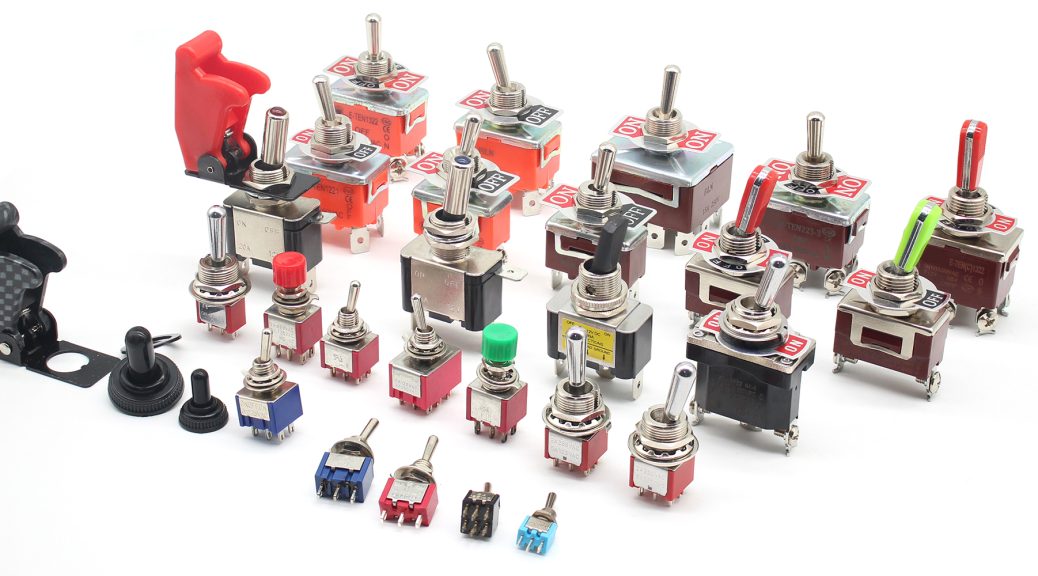
2. Types of Toggle Switches

Type Description
SPST Toggle Switches Simplicity in Function: Single Pole, Single Throw (SPST)
SPST switches are the most basic type, featuring a single input and output. It’s the go-to choice for simple on-off applications, like controlling lights.
DPDT Toggle Switches Doubling the Power: Double Pole, Double Throw (DPDT)
These switches have two input and output terminals, offering more complex control over two separate circuits simultaneously. Ideal for more intricate operations.
Momentary Toggle Switches Fleeting Connections: The Momentary Function
Unlike regular toggles, these switches only maintain their state as long as they’re held down, perfect for temporary actions like signaling or starting a motor.
Miniature Toggle Switches Small But Mighty: Compact Design
Compact in size, these switches retain the functionality of larger versions, making them ideal for tight spaces or intricate electronic projects.
Sealed Toggle Switches Guarding Against the Elements: Waterproof and Dustproof
Sealed switches are designed to withstand harsh environments, making them suitable for outdoor or industrial use where dust or moisture could be a problem.
Illuminated Toggle Switches Shine a Light on Control: Visual Indicators
With built-in lights, these switches indicate their on/off status, perfect for low-light conditions or when you need quick visual confirmation.
Heavy-Duty Toggle Switches Built to Last: Rugged and Durable
These switches are crafted for heavy usage, able to endure frequent flipping without compromising their functionality.
Electronic Toggle Switches The Digital Frontier: Modern Control
Leveraging electronic components, these switches offer advanced features like remote operation or integration into digital systems.
Push Button vs. Toggle Press or Flip: Different Modes of Operation
Exploring the differences between the tactile push-button switches and the classic flip of toggle switches.
Weatherproof Toggle Switches Nature’s Challenges: Withstanding the Elements
Specifically designed to resist weather elements, ensuring consistent functionality despite rain, snow, or extreme temperatures.
Types of Toggle Switches

Toggle switches, in their myriad forms, are the unsung heroes of electrical control. From the simplicity of SPST to the complexity of electronic switches, each type serves a unique purpose in our daily lives, catering to various needs across industries and personal projects.

3. How Toggle Switches Work

At first glance, toggle switches appear straightforward—a lever that moves up or down to control the flow of electricity. However, their inner workings delve deeper into the realm of electrical engineering. These switches consist of a mechanical lever connected to an electrical circuit. This lever is moved between two positions, interrupting or allowing the flow of current.

The core principle behind toggle switches lies in their ability to maintain or change the state of a circuit. When the lever is flipped in one direction, it completes the circuit, allowing electricity to flow. Conversely, toggling it in the opposite direction breaks the circuit, halting the flow of current. This simplistic yet effective design enables users to easily control various devices by toggling between on and off positions.

4. Applications in Daily Life

In an age of digital marvels, toggle switch applications stand as unsung heroes, silently orchestrating convenience across various aspects of daily life. From the mundane routines to the complex operations, these unassuming interfaces have permeated our existence, transforming the way we interact with technology. Let’s delve into their significance and explore their diverse applications in our everyday lives.

Understanding the Versatility of Toggle Switch Applications

Smart Home Integration: Imagine entering your home and effortlessly controlling the lighting ambiance, temperature, or even security systems with a simple toggle on your smartphone. Smart home applications harness the power of toggle switches, allowing users to personalize and automate their living spaces for optimal comfort and security.

Mobile Devices and Apps: From mobile apps to settings within devices, toggle switches govern a myriad of functionalities. These switches enable users to customize preferences swiftly, toggling between various modes, such as silent, airplane, or night modes, with utmost ease.

Gaming and Entertainment: In the realm of gaming and entertainment, toggle switches offer seamless control over in-game settings, audio preferences, or streaming platforms. They provide users with quick access to tailor their experiences to suit their preferences.

Automotive Industry: Modern vehicles integrate toggle switch applications for diverse functionalities, from adjusting seat positions to controlling advanced features like parking assist or adaptive cruise control. These switches enhance user experience and safety while on the road.

Impact on Daily Life

Streamlining Tasks: Toggle switch applications simplify tasks that were once tedious or time-consuming. With a flick of a switch, users can initiate or halt processes, allowing for efficient multitasking and increased productivity.

Accessibility and User-Friendliness: Their intuitive design makes toggle switches accessible to users of all ages and technological expertise. Their user-friendly interface has made technology more inclusive and easier to navigate.

Personalization and Efficiency: The ability to customize settings through toggle switches empowers individuals to tailor their experiences, fostering a sense of control and efficiency in their daily routines.

Toggle Switch Applications

5. Choosing the Right Toggle Switch

Before diving into the selection process, it’s crucial to grasp the fundamental types and functionalities of toggle switches. These switches vary in size, shape, and configuration, catering to diverse applications. The primary types include:

  1. SPST (Single Pole, Single Throw): The simplest form, ideal for basic on-off functions.
  2. DPST (Double Pole, Single Throw): Offers two isolated circuits, beneficial for more complex operations.
  3. SPDT (Single Pole, Double Throw): Enables switching between two separate circuits.
  4. DPDT (Double Pole, Double Throw): Provides versatile switching between two circuits.

Factors to Consider

  1. Application: Determine the specific purpose the toggle switch will serve. Is it for household use, industrial machinery, or automotive applications?
  2. Voltage and Current Ratings: Ensure the switch is compatible with the electrical requirements of your system to prevent overload or inefficiency.
  3. Durability and Material: Consider the environment where the switch will operate. Stainless steel switches are suitable for harsh conditions, while plastic ones might suffice for indoor use.
  4. Mounting Style: Choose between panel mount, PCB mount, or solder lug depending on installation preferences.
  5. Toggle Actuation: Decide between different toggle styles – bat, paddle, or lever – based on ergonomic and usability factors.

Making the Right Choice

Begin by outlining your specific needs. Are you seeking a rugged switch for outdoor equipment or a miniature one for compact devices? Once you’ve identified your requirements, research reputable manufacturers known for quality switches. Check customer reviews, certifications, and warranties to ensure reliability.

Additionally, consulting with industry experts or seeking guidance from professionals can provide valuable insights into selecting the optimal toggle switch for your application.

6. Installing a Toggle Switch

Before delving into the installation process, it’s crucial to understand the basics of toggle switches. These switches come in various types – single-pole, double-pole, three-way, and four-way switches. Each type serves a different purpose, enabling control over one or multiple fixtures from different locations.

Step 1: Gather the Necessary Tools and Materials

To start the installation, gather the required tools and materials. You’ll typically need:

  • Toggle switch
  • Screwdriver set
  • Wire stripper
  • Electrical tape
  • Voltage tester
  • Wires

Step 2: Turn Off Power

Safety first! Head to your circuit breaker and turn off the power to the area where you’ll be working. Use a voltage tester to double-check that the power is indeed off before proceeding.

Step 3: Remove Existing Switch (If Applicable)

If there’s an existing switch, carefully unscrew and remove it from the wall. Take note of the wire connections as a reference for the new toggle switch installation.

Step 4: Install the New Toggle Switch

Follow these steps:

  1. Identify the hot wire and connect it to the common terminal on the toggle switch.
  2. Connect the other wires to their respective terminals based on the switch type.
  3. Secure the connections with wire nuts and electrical tape.
  4. Carefully tuck the wires back into the electrical box.
  5. Attach the toggle switch to the wall using the provided screws.
dpdt switch diagram

Step 5: Test the Switch

After securely installing the toggle switch, turn the power back on and test its functionality. Check all connected fixtures to ensure they respond correctly to the switch.

Safety Measures

  • Always turn off the power before working on electrical installations.
  • Follow the manufacturer’s instructions for the toggle switch.
  • If uncertain, consult a professional electrician.

7. Maintaining Toggle Switches

Importance of Maintenance

Maintaining toggle switches is essential to ensure their smooth operation and longevity. Here are some crucial maintenance tips:

1. Regular Cleaning:

Dust, debris, and oxidation can affect the performance of toggle switches. Use a soft brush or compressed air to clean them regularly, preventing the accumulation of particles that might hinder their movement.

2. Lubrication:

Apply a recommended lubricant to the switch mechanism to prevent friction and ensure smooth toggling. However, be cautious not to over-lubricate, as excess oil can attract more dust.

3. Check for Loose Connections:

Periodically inspect the connections to ensure they are secure and tight. Loose connections can lead to electrical arcing and affect the switch’s functionality.

4. Environmental Considerations:

Protect switches from extreme temperatures, moisture, and corrosive substances. Choose switches designed for specific environmental conditions if necessary.

5. Testing:

Regularly test the switches to ensure they function correctly. Toggle them on and off to confirm their responsiveness and check for any signs of wear or malfunction.

Troubleshooting Common Issues

Despite maintenance efforts, toggle switches might encounter issues:

1. Switch Failing to Toggle:

This could indicate debris or mechanical obstruction. Clean the switch and inspect for any physical hindrances.

2. Inconsistent Performance:

Check for loose connections or worn-out components. Replace damaged parts if necessary.

3. Electrical Arcing:

Address loose connections immediately to prevent potential hazards such as electrical fires.

What is a 19MM Push Button Switch ?

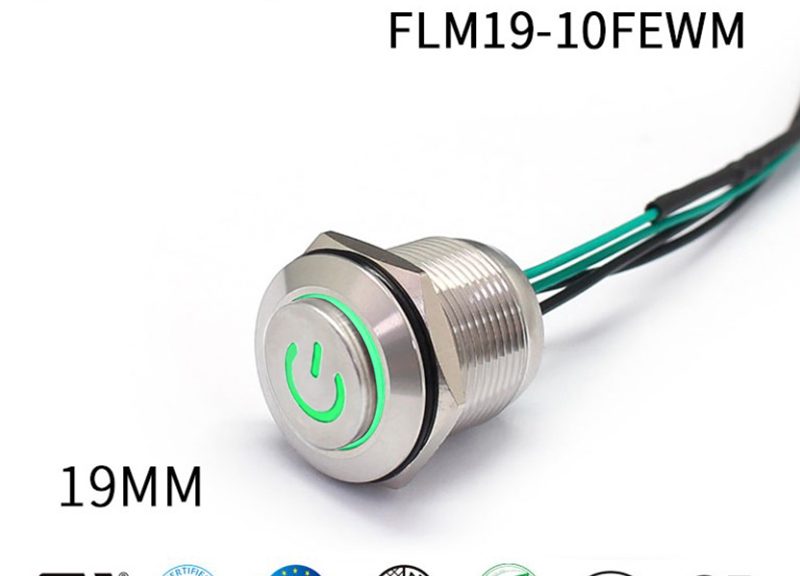
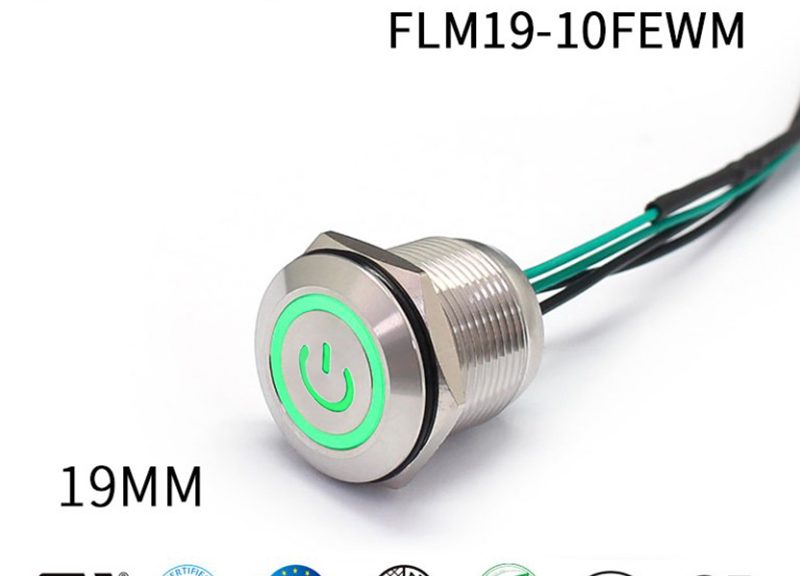
19mm push button switch is an electrical switch widely used in various electronic and electrical devices. Its design aims to facilitate installation on panels or enclosures with a 19mm mounting hole. These switches allow manual control of circuits by pressing a button, providing a reliable and easily accessible manual operation. In this category, we will focus on two main types: the 19mm latching push button switch and the 19mm momentary push button switch.

19mm push button switch

Function of the 19MM Push Button Switch:

Firstly, let’s delve into the 19mm momentary push button switch. This type of switch establishes a circuit connection the moment the button is pressed but immediately disconnects when the button is released. This means that they are only in the powered state for the brief moment the button is pressed. This design makes momentary push button switches ideal for applications that require brief startup or triggering operations. For instance, in some devices, momentary push button switches can be used to start motors, activate one-time functions, or perform other similar short-duration tasks. Their flexibility and straightforward operation principles have led to widespread use in electronic control systems.

Next, let’s examine the 19mm latching push button switch. In contrast to the momentary type, the latching push button switch also establishes a circuit connection when the button is pressed but, unlike momentary switches, it maintains the connection until released by either pressing the button again or using other means. In other words, latching push button switches stay in the pressed state without requiring continuous pressure. This makes them well-suited for applications that require maintaining an open or closed state. For example, latching push button switches can be used as the main power switch for devices, allowing users to easily set the device to an on or off state without continuously holding the button. This type of switch is highly practical in scenarios requiring a prolonged maintenance of a specific state.

momentary and latching push button switch

Both types of 19mm push button switches are designed to meet the diverse requirements of different application scenarios. Whether momentary or latching, they share the same standardized size, fitting a 19mm mounting hole. This standardized design makes these switches easy to integrate into various devices and systems, providing engineers and designers with greater flexibility and choices.

Parameters for the Push Button Switch:

When selecting a 19mm push button switch, considerations beyond the momentary or latching type include crucial factors such as electrical specifications, including voltage and current ratings. Different applications may demand specific electrical parameters, so ensuring that the chosen switch aligns with the specific requirements is crucial. Additionally, some switches come with extra features, such as Ingress Protection (IP) ratings to resist dust and water ingress, or illuminated switches with LED indicators for visual feedback.

In conclusion, the 19mm push button switch is a widely used device in the fields of electronics and electrical engineering. Its design takes into account ease of installation, reliable manual operation, and diverse application needs. Whether in industrial control systems or everyday electronic devices, these switches play a crucial role, providing users with an intuitive and effective way to control circuits.

The 19mm push button switch often comes equipped with waterproof functionality and a housing made of metal, earning it the designation of a metal button switch. This design ensures widespread applicability in environments that demand higher durability and resistance to environmental impact. Here are some key features of this type of switch:

Waterproof Functionality: Due to its waterproof features, the 19mm push button switch can operate in damp or wet environments without sustaining damage. This makes it particularly suitable for outdoor, industrial, and other settings where exposure to liquids is possible.
Metal Housing: The switch’s housing is manufactured from metal, providing additional strength and durability. The metal casing helps withstand physical damage, corrosion, and other factors that could impact the switch.
Durability: The rugged construction of the metal button switch contributes to an extended lifespan, enabling it to withstand more challenging working conditions, such as high temperatures, humidity, and vibrations.
Applicability:  Thanks to its waterproof and metal housing characteristics, this type of switch is commonly used in applications requiring robust protective performance, including marine equipment, outdoor control panels, industrial machinery, and other harsh conditions.
Operation Mode: The 19mm button switch can still be either momentary or latching, depending on specific application requirements. This means users can choose a switch suitable for momentary operations or for maintaining a state over an extended period.
Mini Push Button Switch 2 Pin
Fill out my online form.

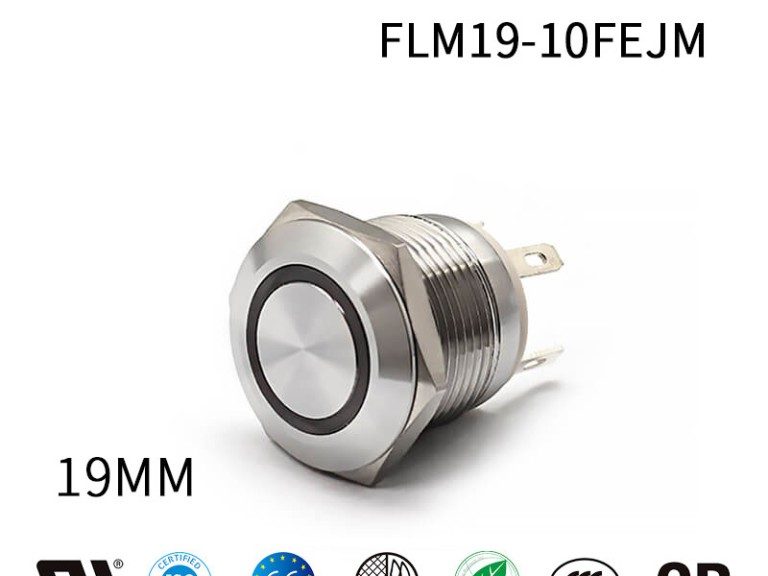
FILN Outdoor Push Button switch Metal Non-Lamped 2PIN Push Button Switch

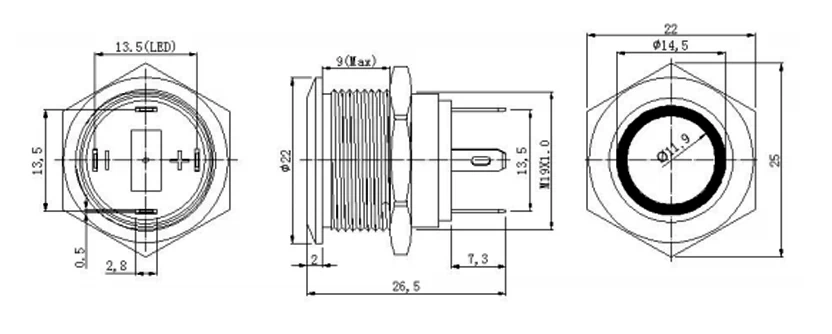
19MM Outdoor Push Button Switch Product Drawings:

Outdoor Push Button Switch Drawings

19MM Outdoor Push Button Switch Specifications:

Production Series FLM19-10FEJM Light Guide Button PC plastic
Button Shape round Actuator 304 Stainless steel/6063
aluminum alloyl
Button LED Color Housing Sleeve H59 brass/304 stainless steel
Mechanical Life The 500 thousand time Button Pin H62 Copper alloy
Electrical Life The 100 thousand time Rubber Ring SIL silica gel
Protection Level IP67 IK09 Nut H59 nickel plated brass
Rated Voltage 3V-220V Housing PA66+GF20% nylon
Rated Current 3A DC
3A AC
Light Source LED
Rated Power 108W(DC)
750W(AC)
Resistor Metal film
Operating Temperature -25℃~+85℃ Contact AgCdO12

19MM Weatherproof Push Button Switch Products:

FILN: Customizable Electronic Push Button Switches with Multiple Certifications

19MM Electronic Push Button Product Drawings:

Digital push button Drawings

19MM Electronic Push Button Specifications:

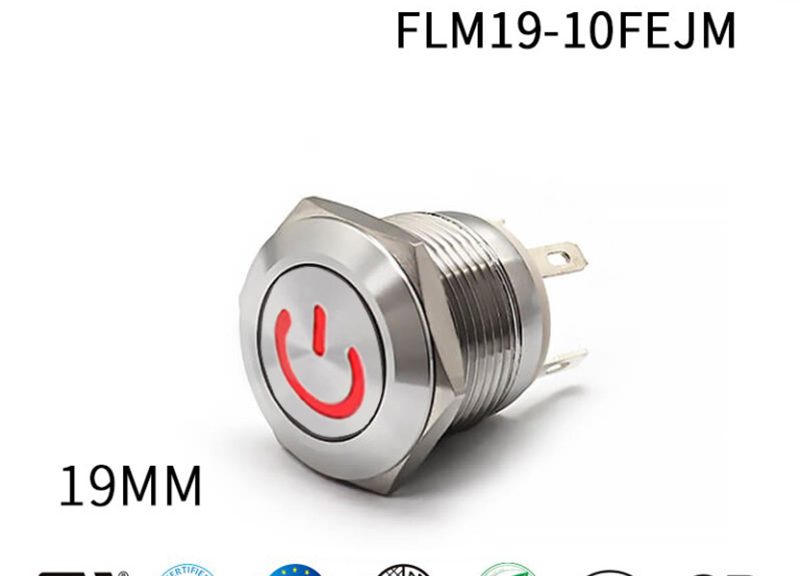
Production Series FLM19-10FEJM Light Guide Button PC plastic
Button Shape round Actuator 304 Stainless steel/6063
aluminum alloyl
Button LED Color R/B/G/Y/W Housing Sleeve H59 brass/304 stainless steel
Mechanical Life The 500 thousand time Button Pin H62 Copper alloy
Electrical Life The 100 thousand time Rubber Ring SIL silica gel
Protection Level IP67 IK09 Nut H59 nickel plated brass
Rated Voltage 3V-220V Housing PA66+GF20% nylon
Rated Current 3A DC
3A AC
Light Source LED
Rated Power 108W(DC)
750W(AC)
Resistor Metal film
Operating Temperature -25℃~+85℃ Contact AgCdO12

19MM Electronic Push Button Products:

FILN Short 4PIN Metal Push Button LED Lights FILN Switches

19MM Weatherproof Push Button Switch Product Drawings:

LED illuminated push switches Drawings

19MM Weatherproof Push Button Switch Specifications:

Production Series FLM19-10FEJM Light Guide Button PC plastic
Button Shape round Actuator 304 Stainless steel/6063
aluminum alloyl
Button LED Color R/B/G/Y/W Housing Sleeve H59 brass/304 stainless steel
Mechanical Life The 500 thousand time Button Pin H62 Copper alloy
Electrical Life The 100 thousand time Rubber Ring SIL silica gel
Protection Level IP67 IK09 Nut H59 nickel plated brass
Rated Voltage 3V-220V Housing PA66+GF20% nylon
Rated Current 3A DC
3A AC
Light Source LED
Rated Power 108W(DC)
750W(AC)
Resistor Metal film
Operating Temperature -25℃~+85℃ Contact AgCdO12

19MM Weatherproof Push Button Switch Products:

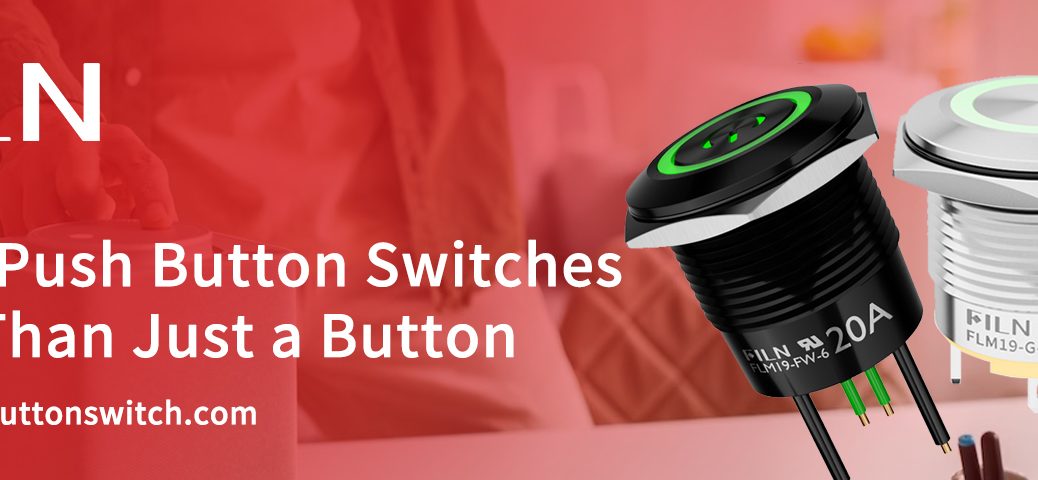
20A High-Power Weatherproof Push Button Switches | FILN

19MM Weatherproof Push Button Switch Product Drawings:

Weather resistant push switch Drawings

19MM Weatherproof Push Button Switch Specifications:

Production Series FLM19-FW-6 Light Guide Button PC plastic
Button Shape round Actuator 304 Stainless steel/6063
aluminum alloyl
Button LED Color R/B/G/Y/W Housing Sleeve H59 brass/304 stainless steel/6063 aluminum alloyl
Mechanical Life The 500 thousand time Button Pin 1.0 high temperature
Teflon line
Electrical Life The 100 thousand time(250V/10A)The 60 thousand time(250V/16A)The 30 thousand time(250V/20A) Rubber Ring SIL silica gel
Protection Level IP67 IK09 Nut H59 brass
Rated Voltage 36V(DC) 250V(AC) Housing PA66+GF20% nylon
Rated Current 20A DC
20A AC
Light Source LED
Rated Power 720W(DC)
5000W(AC)
Resistor Metal film
Operating Temperature -25℃~+85℃ Contact AgCdO12

19MM Weatherproof Push Button Switch Products:

19MM Harness Button Switch Connectors 5Pin Push Button Switch

19MM Switch Connector Product Drawings:

Switch Connector Drawings

19MM Switch Connector Specifications:

Production Series 19MM Switch Connector Light Guide Button PC plastic
Button Shape round Actuator 304 Stainless steel
Button Color  yellow Housing Sleeve H59 nickel plated brass/304Stainless steel
Mechanical Life The 500 thousand time Button Pin H62 copper alloy
Electrical Life The 100 thousand time Rubber Ring SIL silica gel
Protection Level IP67 IK09 Nut H59 nickel plated brass
Rated Voltage 36V(DC) 250V(AC) Housing PA66+GF20% nylon
Rated Current 5A(DC)5A(AC) Light Source
Rated Power 180W(DC)1250W(AC) Resistor Metal film
Operating Temperature -25℃~+85℃ Contact AgCdO12

19MM Switch Connector Products:

FILN Stainless Steel Push Button Switches 19MM Customizable and Certified

19MM Stainless Steel Push Button Product Drawings:

Steel bodied push button Drawings

19MM Stainless Steel Push Button Specifications:

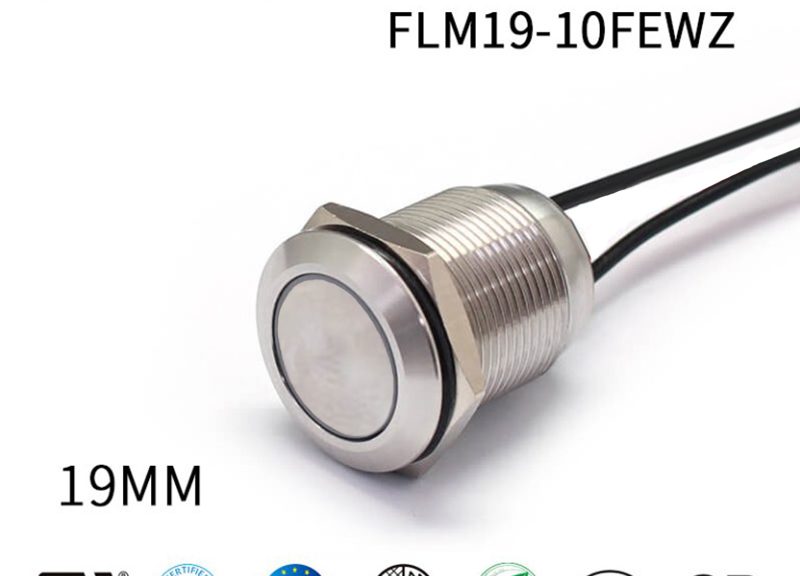
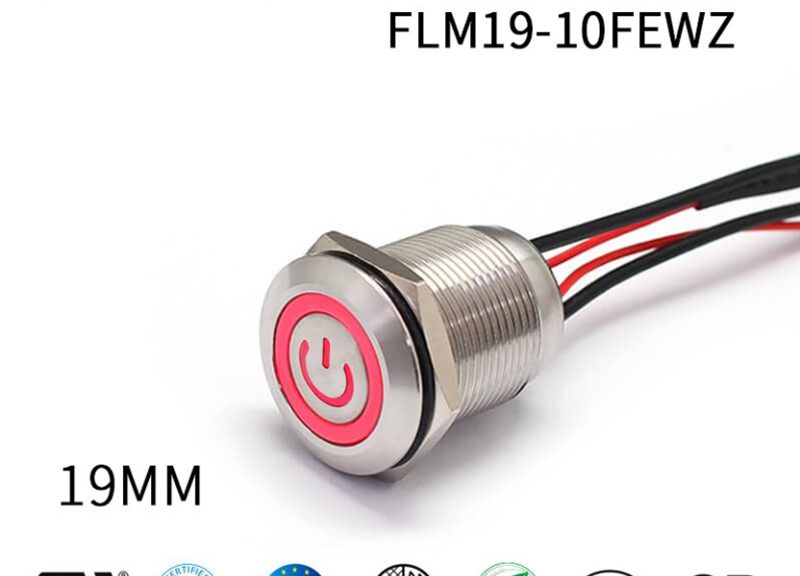
Production Series FLM19-10FEWZ Light Guide Button PC plastic
Button Shape Round Actuator 304 Stainless steel
Button LED Color Housing Sleeve H59 nickel plated brass/304Stainless steel
Mechanical Life The 500 thousand time Button pin 22AWG PVC wire(0.3MM2)
Electrical Life The 100 thousand time Rubber Ring SIL silica gel
Protection Level IP67 IK09 Nut H59 nickel plated brass
Rated Voltage 36V(DC) 250(AC) Housing PA66+GF20% nylon
Rated Current 5A(DC)5A(AC) Light Source LED
Rated Power 36W(DC)125W(AC) Resistor Metal film
Operating Temperature -25℃~+85℃ Contact AgCdO12

19MM Stainless Steel Push Button Related Products:

FILN Sealed Push Button Switches: Customizable, Metal, Wired, 19MM Installation

19MM Sealed Push Button Switch Product Drawings:

Waterproof button switch Drawings

19MM Sealed Push Button Switch Specifications:

Production Series FLM19-10FEWZ Light Guide Button PC plastic
Button Shape Round Actuator 304 Stainless steel
Button LED Color Housing Sleeve H59 nickel plated brass/304Stainless steel
Mechanical Life The 500 thousand time Button pin 22AWG PVC wire(0.3MM2)
Electrical Life The 100 thousand time Rubber Ring SIL silica gel
Protection Level IP67 IK09 Nut H59 nickel plated brass
Rated Voltage 36V(DC) 250(AC) Housing PA66+GF20% nylon
Rated Current 5A(DC)5A(AC) Light Source LED
Rated Power 36W(DC)125W(AC) Resistor Metal film
Operating Temperature -25℃~+85℃ Contact AgCdO12

19MM Sealed Push Button Switch Related Products:

FILN Metal Push Button Switch with LED 4pin Customizable, Certified, and Multi-Voltage Options

19MM Push Button with Led Product Drawings:

Push button with built in LED Drawings

19MM Push Button with Led Specifications:

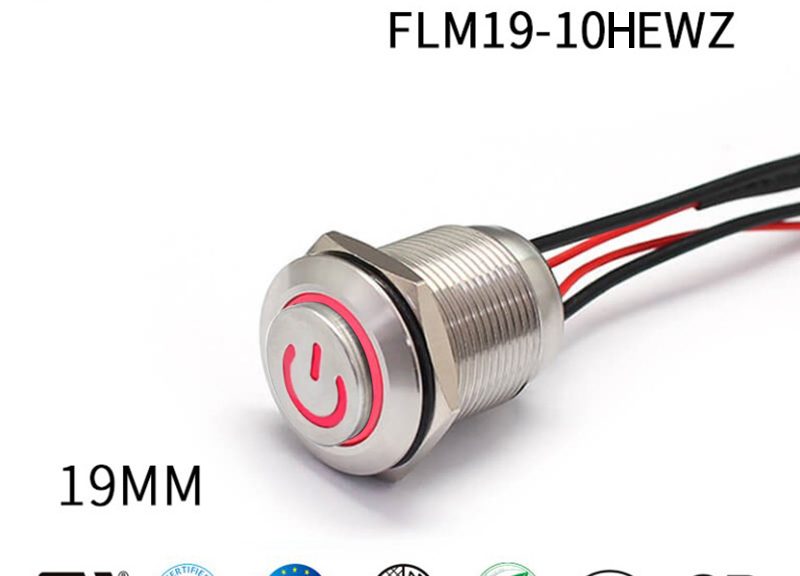
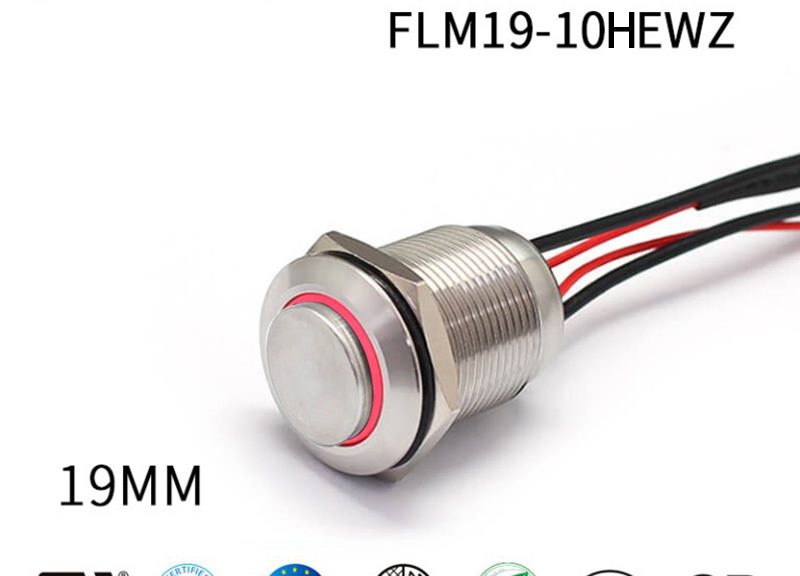
Production Series FLM19-10HEWZ Light Guide Button PC plastic
Button Shape Round Actuator 304 Stainless steel
Button LED Color Red blue orange green white Housing Sleeve H59 nickel plated brass/304Stainless steel
Mechanical Life The 500 thousand time Button pin 22AWG PVC wire(0.3MM2)
Electrical Life The 100 thousand time Rubber Ring SIL silica gel
Protection Level IP67 IK09 Nut H59 nickel plated brass
Rated Voltage 36V(DC) 250(AC) Housing PA66+GF20% nylon
Rated Current 5A(DC)5A(AC) Light Source LED
Rated Power 36W(DC)125W(AC) Resistor Metal film
Operating Temperature -25℃~+85℃ Contact AgCdO12

19MM Push Button with Led Related Products:

FILN 19MM Stainless Push Button Switch IP67 4PIN Swicth Customizable Versatile

19MM Stainless Push Button Switch Product Drawings:

Stainless steel button switch Drawings

19MM Stainless Push Button Switch Specifications:

Production Series FLM19-10FEWZ Light Guide Button PC plastic
Button Shape Round Actuator 304 Stainless steel
Button LED Color Red blue orange green white Housing Sleeve H59 nickel plated brass/304Stainless steel
Mechanical Life The 500 thousand time Button pin 22AWG PVC wire(0.3MM2)
Electrical Life The 100 thousand time Rubber Ring SIL silica gel
Protection Level IP67 IK09 Nut H59 nickel plated brass
Rated Voltage 36V(DC) 250(AC) Housing PA66+GF20% nylon
Rated Current 5A(DC)5A(AC) Light Source LED
Rated Power 36W(DC)125W(AC) Resistor Metal film
Operating Temperature -25℃~+85℃ Contact AgCdO12

19MM Stainless Push Button Switch Related Products:

FILN Luminous Push Button Switch 19MM Metal Switches with 4PIN Wired Connection

19MM Luminous Push Button Product Drawings:

Illuminated push button switch Drawings 1

19MM Luminous Push Button Specifications:

Production Series FLM19-10HEWZ Light Guide Button PC plastic
Button Shape Round Actuator 304 Stainless steel
Button LED Color Red blue orange green white Housing Sleeve H59 nickel plated brass/304Stainless steel
Mechanical Life The 500 thousand time Button pin 22AWG PVC wire(0.3MM2)
Electrical Life The 100 thousand time Rubber Ring SIL silica gel
Protection Level IP67 IK09 Nut H59 nickel plated brass
Rated Voltage 36V(DC) 250(AC) Housing PA66+GF20% nylon
Rated Current 5A(DC)5A(AC) Light Source LED
Rated Power 36W(DC)125W(AC) Resistor Metal film
Operating Temperature -25℃~+85℃ Contact AgCdO12

19MM Luminous Push Button Related Products:

FILN Custom Push Button Switches Tailored Solutions for Your Needs

19MM Custom Push Button Product Drawings:

Tailored push button switch Drawings

19MM Custom Push Button Specifications:

Production Series FLM19-10HEWM Light Guide Button
Button Shape round Actuator 304 Stainless steel
Button LED Color Red, blue, green, Orange and white Housing Sleeve H59 nickel plated brass/304Stainless stee
Mechanical Life 500,000 times Button Pin H62 Copper alloy
Electrical Life 250,000 times Rubber Ring SIL silica gel
Protection Level IP67 IK10 Nut H59 nickel plated brass
Rated Voltage 1.5V-250VAC/DC Housing PA66+GF20% nylon
Rated Current 1.5V-250VAC/DC Light Source LED
Rated Power 36W(DC)125W(AC) Resistor
Operating Temperature -30℃~+80℃ Ccontact AgCdO12

19MM Custom Push Button Related Products:

FILN 19MM Metal Push Button 12V Momentary Switch with 5PIN Wire, Dual Color Any Voltage

19MM 12V Momentary Switch Product Drawings:

12 volt push button switch Drawings

19MM 12V Momentary Switch Specifications:

Production Series FLM19-10FEWM Light Guide Button
Button Shape round Actuator 304 Stainless steel
Button LED Color Red, blue, green, Orange and white Housing Sleeve H59 nickel plated brass/304Stainless stee
Mechanical Life 500,000 times Button Pin H62 Copper alloy
Electrical Life 250,000 times Rubber Ring SIL silica gel
Protection Level IP67 IK10 Nut H59 nickel plated brass
Rated Voltage 1.5V-250VAC/DC Housing PA66+GF20% nylon
Rated Current 1.5V-250VAC/DC Light Source LED
Rated Power 36W(DC)125W(AC) Resistor
Operating Temperature -30℃~+80℃ Ccontact AgCdO12

19MM 12V Momentary Switch Related Products: