What are the Disadvantages of Push Button Switches?

Push button switches are widely used in various applications, from household appliances to industrial machinery. While they offer numerous benefits, such as ease of use and durability, there are also several disadvantages associated with push button switches. This article explores these drawbacks to provide a comprehensive understanding for potential users.

push button switch

1. Limited Current Handling Capacity

One of the primary disadvantages of push button switches is their limited current handling capacity. Unlike toggle switches, which can manage higher current ratings, push button switches typically support lower currents. This limitation makes them unsuitable for applications requiring high current flows, such as industrial machinery or heavy-duty electrical systems.

2. Durability Issues

Push button switches are prone to wear and tear over time, especially when used frequently. The mechanical components inside the switch can degrade, leading to potential failure or reduced functionality. This issue is particularly problematic in environments with heavy usage, where the switch’s longevity is crucial for uninterrupted operation.

3. Accidental Activation

Another significant drawback is the risk of accidental activation. Push button switches are often designed to be easy to press, which can lead to unintentional operation. In critical applications, such as emergency shutdown systems, accidental activation can have serious consequences. Therefore, additional safety measures are often required to prevent inadvertent use.

4. Limited Functionality

Push button switches generally offer limited functionality compared to other types of switches, such as toggle or rotary switches. They typically operate in a simple on-off manner, lacking the ability to handle more complex switching tasks. For applications requiring multiple positions or more sophisticated control, push button switches may not be the best choice.

5. Higher Cost

In some cases, push button switches can be more expensive than other types of switches. This higher cost is due to the materials and design complexities involved in manufacturing push button switches. For budget-sensitive projects, the additional expense might be a significant factor to consider.

6. Space Constraints

Push button switches can take up more space than other types of switches, especially when multiple buttons are required. This spatial requirement can be a disadvantage in compact devices or applications where space is at a premium. Designers may need to find creative solutions to integrate push button switches without compromising on the overall size and layout of the device.

7. Maintenance Requirements

Regular maintenance is often necessary to ensure the reliable operation of push button switches. Dust, dirt, and moisture can infiltrate the switch mechanism, leading to potential malfunction or failure. This maintenance requirement can increase the overall cost and complexity of using push button switches, particularly in environments where cleanliness and regular upkeep are challenging.

Conclusion

While push button switches offer many advantages, such as ease of use and versatility, they also come with several disadvantages. Limited current handling capacity, durability issues, accidental activation, limited functionality, higher cost, space constraints, and maintenance requirements are all factors that potential users need to consider. By understanding these drawbacks, you can make a more informed decision about whether push button switches are the right choice for your specific application.

In conclusion, push button switches are a valuable component in many systems, but they are not without their challenges. Careful consideration of their disadvantages can help in selecting the most appropriate switch type for your needs, ensuring reliable and efficient operation.
Fill out my online form.

FILN’s New Emergency Stop Buttons: LED and Waterproof Models

Introduction

FILN, a leading manufacturer of electrical components and  push button switches.has recently unveiled two innovative emergency stop buttons. These new products are designed to enhance safety and reliability in various industrial applications. The latest additions to FILN’s product line include an LED emergency stop button and a waterproof emergency stop switch. In this article, we’ll explore the features and benefits of these advanced emergency stop buttons, ensuring you make an informed decision for your safety needs.

What is an Emergency Stop Button?

An emergency stop button, often referred to as an E-stop, is a safety mechanism used to shut down machinery or equipment in an emergency situation. It is crucial for preventing accidents and ensuring the safety of operators. FILN’s new emergency stop buttons are designed to meet the highest standards of safety and reliability.

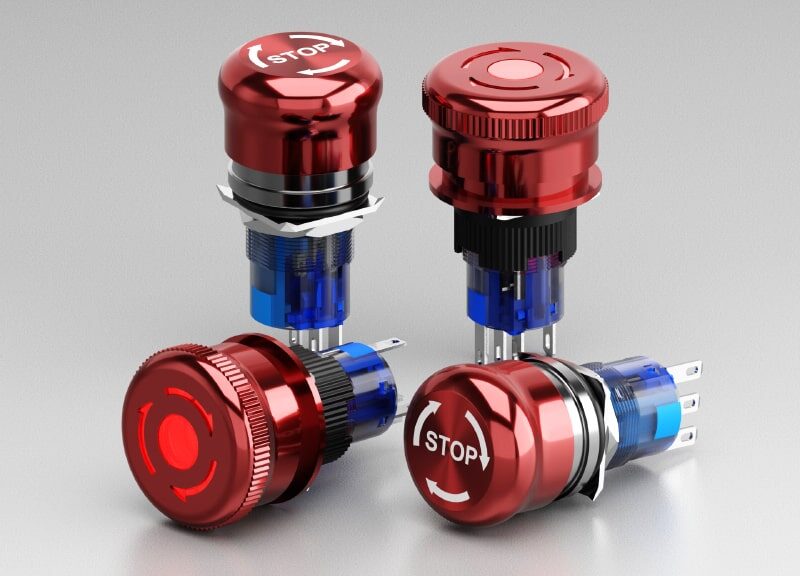
Standard emergency stop buttons typically feature a red mushroom head and are made from either plastic or metal. FILN has chosen to use metal materials to develop two new emergency stop buttons.

These buttons are available in sizes of 16mm, 19mm, and 22mm (0.63in, 0.74in, 0.87in). The LED emergency stop button can also be customized with different light colors.

Emergency Stop Buttons

Introducing FILN’s LED Emergency Stop Button

Enhanced Visibility with LED Illumination

FILN’s LED emergency stop button is equipped with a built-in LED light, providing enhanced visibility in low-light conditions. This feature ensures that the emergency stop button can be easily located and activated, even in dimly lit environments. The LED light also serves as a status indicator, allowing operators to quickly identify whether the button has been pressed.

Durability and Longevity

The LED emergency stop button from FILN is built to last, with a robust design that can withstand the rigors of industrial use. The LED light has a long lifespan, reducing the need for frequent replacements and maintenance. This durability translates to cost savings and increased operational efficiency.

Easy Installation and Integration

FILN’s LED emergency stop button is designed for easy installation and integration into existing systems. Its compact design and standard mounting dimensions make it compatible with a wide range of equipment and machinery. The button’s intuitive design ensures that it can be quickly and easily installed by operators.

Emergency stop switch with light

Discover FILN’s Waterproof Emergency Stop Switch

Superior Protection Against Moisture and Dust

The waterproof emergency stop switch from FILN is engineered to provide reliable performance in challenging environments. With an IP67 rating, this switch is protected against dust and water ingress, making it ideal for use in outdoor and wet conditions. This level of protection ensures that the switch will continue to function effectively, even in harsh environments.

Robust and Reliable Design

FILN’s waterproof emergency stop switch is built with high-quality materials to ensure longevity and reliability. The switch is resistant to corrosion and can withstand extreme temperatures, making it suitable for a variety of industrial applications. Its robust design ensures that it will perform consistently, even under demanding conditions.

Easy to Operate and Maintain

The waterproof emergency stop switch is designed for ease of use, with a large, easily accessible button that can be quickly activated in an emergency. Its simple design also makes it easy to maintain, with minimal components that require regular servicing. This ease of operation and maintenance ensures that the switch remains reliable and effective over time.

Waterproof Emergency Stop Switch

Why Choose FILN for Your Emergency Stop Button Needs?

Commitment to Quality and Safety

FILN is dedicated to providing high-quality products that meet the strictest safety standards. Their emergency stop buttons are rigorously tested to ensure they provide reliable performance in critical situations. By choosing FILN, you can be confident that you are investing in products that prioritize safety and reliability.

Innovative Solutions for Diverse Applications

FILN’s range of emergency stop buttons, including the LED emergency stop button and the waterproof emergency stop switch, are designed to meet the needs of various industries. Whether you need enhanced visibility or superior protection against environmental factors, FILN has a solution to fit your requirements.

Exceptional Customer Support

FILN prides itself on offering exceptional customer support. Their team of experts is available to assist with product selection, installation, and maintenance, ensuring you get the most out of your emergency stop buttons. With FILN, you can rely on comprehensive support throughout the lifecycle of your products.

Conclusion

FILN’s new LED emergency stop button and waterproof emergency stop switch represent the latest advancements in safety technology. These innovative products are designed to provide reliable performance and enhance safety in a variety of industrial applications. By incorporating these emergency stop buttons into your safety systems, you can ensure the protection of your operators and equipment. Choose FILN for your emergency stop button needs and experience the difference that quality and innovation can make.

Fill out my online form.

How Does a Push Button Switch Work?

The push button switch is a ubiquitous control mechanism found in various electronic devices. Its simplicity belies a complex interaction of mechanical and electrical components. This article delves into the inner workings of a push button switch.

push button switch

What is a Push Button Switch?

A push button switch is an electrical switch that is operated by pressing a button. It is commonly used in applications requiring a simple on-off control, such as in car radios, power tools, and gaming controllers. The main function of a push button switch is to complete or interrupt an electrical circuit, thereby turning a device on or off.

How a Push Button Switch Functions

Mechanical Operation

When you press the button, it moves a lever or a set of contacts within the switch. This mechanical action is the initial step that triggers the switch’s functionality.

Electrical Connection

The movement of the lever completes or interrupts an electrical circuit, depending on its design. When the contacts within the switch meet, the circuit is closed, allowing electricity to flow. Conversely, when the contacts are separated, the circuit is broken, stopping the flow of electricity.

Push Button Switch Functions

Components of a Push Button Switch

  • Button: The part that is pressed to operate the switch.
  • Contacts: Metal pieces that touch or separate to make or break the electrical connection.
  • Spring: Returns the button to its original position after being pressed.
  • Housing: Protects the internal components and provides support.

Types of Push Button Switches

Momentary Push Button Switches

These switches complete the circuit only while the button is being pressed. Once the button is released, the circuit is broken. They are commonly used in devices like doorbells and keyboard keys.

Latching Push Button Switches

These switches stay in their new position after being pressed, requiring a second press to return to their original state. They are often used in power switches for devices like flashlights and some electronic equipment.

Illuminated Push Button Switches

Equipped with an internal light, these switches indicate their status through illumination, providing a visual cue for the user.

Waterproof Pushbutton Switches

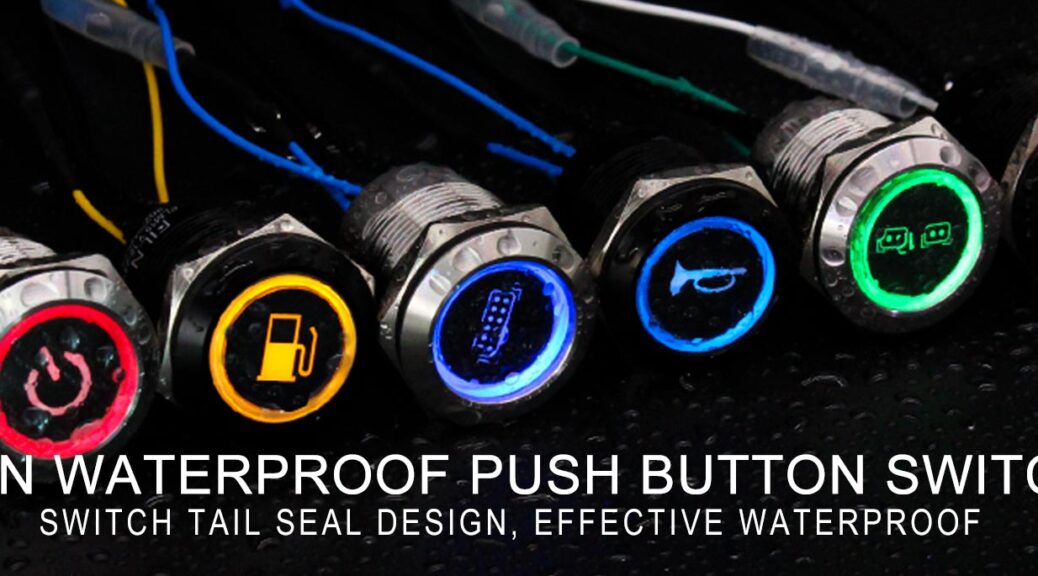
FILN waterproof pushbutton switches have a maximum waterproof rating of IP68, which is the higher standard for waterproofing, and are commonly available in non-waterproof or IP65. IP68 fully waterproof pushbutton switches can also be used in water to control equipment properly.

In addition to the several types of pushbutton switches mentioned above, a large number of other types of switches are also available.FILN is a manufacturer of pushbutton switches, which develops and produces all kinds of related pushbutton switches and supports customized production for you.

metal-push-button-switch

Step-by-Step Operation

  1. Press the Button: The user applies force to the button.
  2. Lever Movement: The button’s movement triggers a lever to move.
  3. Contact Engagement: The lever’s movement brings the contacts together or separates them.
  4. Electrical Signal: The change in contact position allows or stops the flow of electricity.

Applications of Push Button Switches

Push button switches are used in a wide range of applications due to their reliability and ease of use. They are found in everything from household appliances to industrial machinery. Examples include:

  • Consumer Electronics: Devices like calculators, remote controls, and gaming consoles.
  • Industrial Equipment: Used to start and stop machinery.
  • Automotive Industry: Implemented in vehicle dashboards for various controls.

Advantages of Push Button Switches

  • Ease of Use: Simple operation with a single press.
  • Reliability: Durable and capable of handling multiple actuations.
  • Cost-Effective: Affordable and widely available.

External Resources

For more detailed information and visual explanations, check out these resources:

Conclusion

Understanding the operation of a push button switch is key to utilizing it effectively in various electronic systems. Whether you’re a hobbyist or a professional, knowing the basics ensures safe and efficient use. Push button switches are essential components in many electronic systems, offering simplicity and reliability. By mastering the use of push button switches, you can improve the functionality and efficiency of your electronic projects and devices.

Fill out my online form.

What is the Importance of Push Button Switches?

push button switch

Push button switches are essential components in various electrical and electronic applications. Their importance can be highlighted through several key points:

1. Push Button Switch User Convenience and Accessibility

Push button switches are designed for ease of use. They require minimal force to operate, making them accessible to a wide range of users, including those with limited dexterity. The simple press-and-release mechanism provides a straightforward way to control devices and systems.

2. Versatility and Wide Application

These switches are used in a vast array of applications, from household appliances to industrial machinery. They serve critical functions in consumer electronics, automotive systems, medical devices, and many other fields. Their versatility makes them a fundamental component in both everyday gadgets and specialized equipment.

Applications of push button switch

3. Safety and Reliability

Push button switches contribute to the safety and reliability of electrical systems. They often include features like emergency stop functions, which are crucial in industrial settings to quickly halt machinery and prevent accidents. The durability of push button switches ensures consistent performance over time, which is vital for maintaining operational safety.

4. Compact and Space-Efficient Design

The compact size of push button switches allows them to be integrated into devices without taking up much space. This is particularly important in modern electronics, where space is at a premium. Their small form factor makes them ideal for applications requiring high-density electronic packaging.

Ultra short push button switch

5. Aesthetic and Functional Design

Push button switches can be designed to blend seamlessly with the aesthetics of a device or control panel. They come in various shapes, sizes, and colors, which can enhance the user interface’s visual appeal and functionality. Illuminated push buttons, for example, provide visual feedback, indicating the status of the device or system.

6. Cost-Effectiveness

Push button switches are relatively inexpensive compared to other types of control switches. Their cost-effectiveness, combined with their functionality, makes them a popular choice for manufacturers and designers looking to keep production costs low while maintaining high standards of performance and reliability.

7. Ease of Integration and Maintenance

The straightforward design of push button switches makes them easy to integrate into new or existing systems. They can be quickly installed and replaced if necessary, minimizing downtime and maintenance costs. This ease of integration and maintenance is crucial in settings where equipment uptime is critical.

Conclusion

In summary, push button switches are vital components due to their user-friendly design, versatility, safety features, compact size, aesthetic appeal, cost-effectiveness, and ease of integration. Their importance spans across various industries, highlighting their indispensable role in modern technology and everyday life.