How Do I Choose a Push Button Switch?

1. Introduction

Choosing the right Push button switches might seem straightforward, but there’s a lot more to it than meets the eye. Whether you’re working on an industrial machine, a piece of consumer electronics, or a home automation system, the right switch can make all the difference. Let’s dive into everything you need to know to make an informed decision.

push button switch

2. Types of Push Button Switches

There is a varied assortment of push button switches, each tailor-made for specific use cases:
  • Momentary vs. Latching:
    Momentary push button switches, true to their name, remain in their ‘on’ or ‘off’ state only whilst being pressed. The moment the pressure is lifted, they revert to their original state. Conversely, latching switches stay put in their current state until they are pressed again, enabling the change of state.
  • Illuminated vs. Non-Illuminated:
    Illuminated push button switches come with a built-in light source that signals their operational status, providing a visual aid to the user. Non-illuminated switches, on the other hand, do not have this feature.
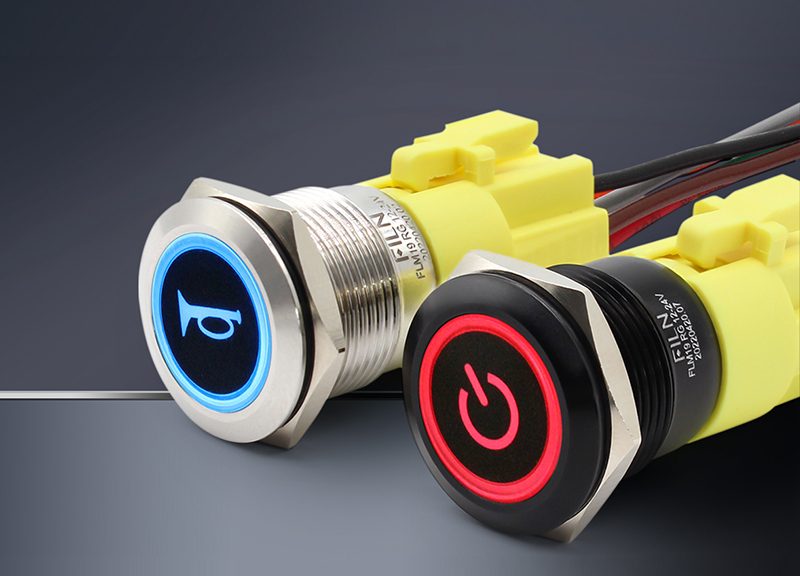
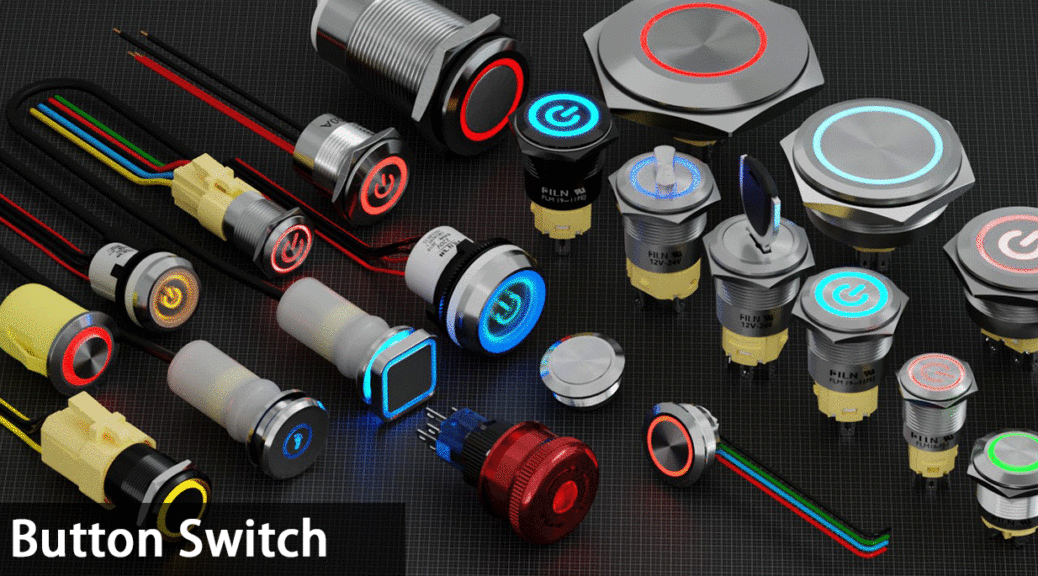
    FILN can produce all kinds of LED pushbutton switches, the common ones are ring buttons with lights and power symbol buttons, in fact, we can also customize all kinds of buttons with different symbols, and the colors can also be produced as single-color, two-color and three-color pushbutton switches.
  • Single-Pole vs. Multi-Pole:
    Single-pole switches are crafted to control one circuit. However, multi-pole switches, with their ability to control multiple circuits at the same time, provide an added layer of versatility.
    Currently FILN has developed the 4NO-4NC switch, which allows one FILN switch to control four devices at the same time.
  • Emergency stop button switch:
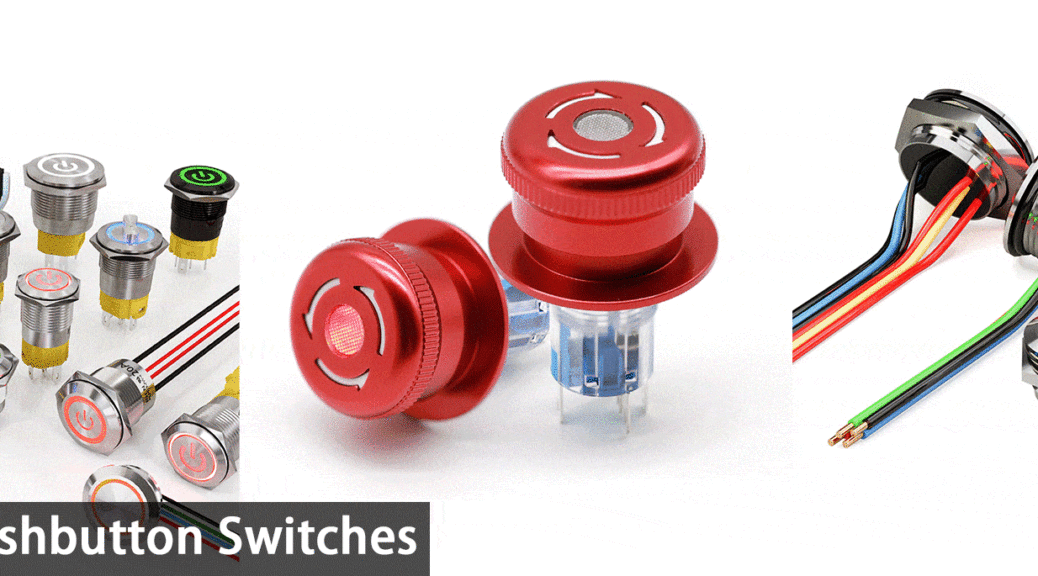
    as the name suggests is the emergency stop button switch, some large industrial equipment need to be equipped with an emergency stop button switch in order to prevent the occurrence of danger, FILN developed a waterproof IP67 emergency button switch, which is relatively rare on the market. FILN also offers lighted emergency stop switches.
  • Ultra-thin tactile button switches:
    These types of button switches are much smaller in size compared to conventional ones, primarily designed for use in confined spaces. They feature a short-stroke tactile mechanism, which provides a better feel and operational experience.
    FILN has developed various wiring methods to cater to different installation environments, including pin switches that directly connect to the circuit board, connector button switches that can be plugged and unplugged with connectors, and wire-attached ultra-thin button switches with a certain level of waterproof capability.
Types-of-Pushbutton-Switches-min

3. How Push Button Switches Work

The mechanics behind the functioning of push button switches are fairly straightforward.

When the button is pressed, it forces a conductive element—typically metallic—to bridge the gap between the two contacts, thereby forming a complete electrical circuit. This action facilitates the flow of current through the switch, powering the device it’s connected to.

However, when the button is released, the contacts are disconnected, resulting in the circuit being broken and the flow of current being ceased.

3. Applications of Push Button Switches

Industrial Applications

In industrial settings, push button switches are used to control machinery and equipment. They need to be robust, durable, and reliable to withstand harsh environments.

Consumer Electronics

From power buttons on your TV remote to game controllers, push button switches are integral to consumer electronics. They need to be responsive and durable.

Automotive Applications

Cars use push button switches for various functions, such as starting the engine or controlling the stereo. These switches must be able to endure vibrations and extreme temperatures.

Home Automation

In smart homes, push button switches control lighting, security systems, and other automated features. They should be easy to use and aesthetically pleasing.

filn push button starter switch

4. Key Factors to Consider

Electrical Ratings

Understanding the electrical ratings of a switch is crucial. This includes voltage, current rating, and contact resistance. Make sure the switch can handle the electrical load of your application.

Mechanical Durability

Consider the actuation force (how hard you need to press), lifespan (how many presses it can handle), and overall build quality.

Environmental Conditions

Think about where the switch will be used. Temperature range, ingress protection (IP) rating, and resistance to factors like dust and moisture are important.

Aesthetic and Ergonomic Considerations

The design, finish, size, and shape of the switch should fit your application and be comfortable for users.

The Application of Button Switches

5. Understanding Electrical Ratings

  1. Voltage Rating
    The voltage rating tells you the maximum voltage the switch can handle. Ensure it matches your application’s requirements.
  2. Current Rating
    This rating indicates the maximum current the switch can carry without being damaged. Choosing a switch with the correct current rating is essential for safety and functionality.
  3. Contact Resistance
    Low contact resistance ensures minimal power loss and efficient operation. It’s a key factor in the switch’s performance.

6. Mechanical Durability

  1. Actuation Force
    This is the amount of force required to press the switch. It should be comfortable for the user but not so light that it triggers accidentally.
  2. Lifespan of the Switch
    Measured in cycles, the lifespan tells you how many times the switch can be pressed before it fails. For heavy-use applications, a high lifespan is crucial.
  3. Build Quality
    Look for switches made from durable materials that can withstand your application’s demands.

7. Aesthetic and Ergonomic Considerations

  1. Design and Finish
    The switch’s appearance should match your application’s design. Consider color, texture, and overall look.
  2. Size and Shape
    Make sure the switch is the right size and shape for its intended use. It should fit comfortably where it will be installed.
  3. User Experience
    A switch should be intuitive and easy to use. Test it to ensure it provides a good user experience.

10. Choosing the Right Manufacturer

  1. Reputation and Reviews
    Research manufacturers and read reviews to find a reputable supplier. A good manufacturer will provide reliable, high-quality switches.
  2. Warranty and Support
    Check for warranties and customer support options. This can be crucial if you encounter issues with your switch.
  3. Customization Options
    Some manufacturers offer customization options. If you need a specific design or feature, look for manufacturers who can accommodate your needs.

FILN is a professional manufacturer of pushbutton switches, we can customize the appearance of the buttons described above, the size of the dimensions and any knowledge related to pushbutton switches.
Currently, we have 10 push button switch technical engineers, we are confident that we can solve any switch problem quickly, serve every customer one to one, and keep developing new push button switches to pay our part for this society.

FILN Corporation

11.Choosing the Right Push Button Switch

Selecting the right push button switch for your application involves several factors:

  • Load Requirements: Ensure the switch can handle the electrical load of your application.
  • Environmental Conditions: Consider factors such as moisture, temperature, and dust that the switch will be exposed to.
  • Application-Specific Needs: Choose a switch that meets the specific requirements of your application, such as illumination, size, and mounting style.

Conclusion

Choosing the right push button switch involves considering various factors, from electrical ratings to environmental conditions and user experience. By understanding your specific needs and researching your options, you can find the perfect switch for your application.

Choosing Push Button Switch FAQs

1. What is the difference between a momentary and a latching push button switch?
A momentary switch is only active while pressed, while a latching switch stays in one state until pressed again.

2. How do I determine the right electrical rating for my application?
Check the voltage and current requirements of your application and choose a switch with matching or higher ratings.

3. Can push button switches be used outdoors?
Yes, but ensure they have a suitable IP rating for protection against dust and water.

4. What should I consider when choosing the design of a push button switch?
Consider the aesthetic, ergonomic factors, and how well the design fits your application.

5. How do I maintain and clean my push button switch?
Regularly inspect and clean the switch, following the manufacturer’s guidelines. Replace any worn-out parts to maintain performance.
Fill out my online form.

What is the Importance of Push Button Switch?

1. Introduction

Push button switches, a common sight in our everyday lives, are omnipresent in myriad devices from simple household gadgets to complex industrial machinery. Owing to their streamlined and effective design, they allow us to operate electrical circuits with the least effort, thus making them an integral part of modern technology. In the forthcoming discussion, we aim to highlight the importance of push button switches, explore their varied types and applications, and understand why they hold such a central role in daily as well as industrial scenarios.

The Application of Button Switches

2. What is a Push Button Switch?

A push button switch, as the name suggests, is an electrical switch that is activated by the simple act of pressing a button. Its fundamental task is to either create or break an electrical circuit, thus allowing or halting the passage of current. These switches usually consist of a button, a protective housing, and electrical contacts. On pressing the button, the contacts come together, forming a complete circuit. However, when the button is released, the circuit is interrupted again.

push button switch

3. History of Push Button Switches

The rich lineage of push button switches spans over a century, having their origins in the early 1900s. Initially, they found use in rudimentary electrical devices, but there has been a significant transformation in their design and functionality over the years. Early iterations, despite being groundbreaking for their time, were often bulky and lacked in reliability. However, thanks to leaps in material technology and manufacturing methodologies, we now have at our disposal push button switches that are compact, durable, and extremely reliable, marking a stark contrast to their initial versions.

4. Types of Push Button Switches

There is a varied assortment of push button switches, each tailor-made for specific use cases:
  • Momentary vs. Latching:
    Momentary push button switches, true to their name, remain in their ‘on’ or ‘off’ state only whilst being pressed. The moment the pressure is lifted, they revert to their original state. Conversely, latching switches stay put in their current state until they are pressed again, enabling the change of state.
  • Illuminated vs. Non-Illuminated:
    Illuminated push button switches come with a built-in light source that signals their operational status, providing a visual aid to the user. Non-illuminated switches, on the other hand, do not have this feature.
    FILN can produce all kinds of LED pushbutton switches, the common ones are ring buttons with lights and power symbol buttons, in fact, we can also customize all kinds of buttons with different symbols, and the colors can also be produced as single-color, two-color and three-color pushbutton switches.
  • Single-Pole vs. Multi-Pole:
    Single-pole switches are crafted to control one circuit. However, multi-pole switches, with their ability to control multiple circuits at the same time, provide an added layer of versatility.
    Currently FILN has developed the 4NO-4NC switch, which allows one FILN switch to control four devices at the same time.
  • Emergency stop button switch:
    as the name suggests is the emergency stop button switch, some large industrial equipment need to be equipped with an emergency stop button switch in order to prevent the occurrence of danger, FILN developed a waterproof IP67 emergency button switch, which is relatively rare on the market. FILN also offers lighted emergency stop switches.
  • Ultra-thin tactile button switches:
    These types of button switches are much smaller in size compared to conventional ones, primarily designed for use in confined spaces. They feature a short-stroke tactile mechanism, which provides a better feel and operational experience.
    FILN has developed various wiring methods to cater to different installation environments, including pin switches that directly connect to the circuit board, connector button switches that can be plugged and unplugged with connectors, and wire-attached ultra-thin button switches with a certain level of waterproof capability.
Types-of-Pushbutton-Switches-min

5. How Push Button Switches Work

The mechanics behind the functioning of push button switches are fairly straightforward.

When the button is pressed, it forces a conductive element—typically metallic—to bridge the gap between the two contacts, thereby forming a complete electrical circuit. This action facilitates the flow of current through the switch, powering the device it’s connected to.

However, when the button is released, the contacts are disconnected, resulting in the circuit being broken and the flow of current being ceased.

6. Applications of Push Button Switches

The remarkable versatility of push button switches enables their usage across a wide array of applications:


Household Appliances: Push button switches are integral to many household appliances. Be it microwave ovens that warm up our meals or washing machines that launder our clothes, these switches provide a simple and reliable means of control.


Industrial Machinery: Within industrial environments, push button switches play a critical role. They are commonly used to initiate or halt machinery, often as part of larger, comprehensive control panels.


Consumer Electronics: Everyday devices such as computers, calculators, and remote controls rely heavily on push button switches for user interaction and input.
filn push button starter switch

7. Advantages of Push Button Switches

Push button switches bring several benefits to the table:


Ease of Use: Their operation is undeniably intuitive, requiring nothing more than a simple press to activate or deactivate. This simplicity makes them incredibly user-friendly.


Durability: These switches are designed to endure repeated use, making them notably robust and long-lasting.


Versatility: Given the multitude of configurations they come in, push button switches display impressive versatility. This wide range of options allows them to fit seamlessly into almost any electrical application.

8. Significance in Safety Systems

Push button switches occupy a significant position in safety systems across various sectors. Emergency stop buttons, standard features in industrial setups, provide operators with the ability to instantly deactivate machinery during emergencies. Safety interlocks employ push button switches to make sure that equipment remains non-operational until certain prerequisites are fulfilled, thus enhancing safety.

9. Innovations and Future Trends

The Significance of Push Button Switches in Automation
Push button switches hold a critical position in automated systems. They act as manual interfaces, enabling the control of automated procedures.
Furthermore, they can be combined with other elements such as sensors and actuators. This amalgamation facilitates the creation of complex control frameworks, augmenting the effectiveness and functionality of automated systems.

10. Common Issues and Troubleshooting

While push button switches are generally reliable, they can encounter problems such as:

  • Contact Wear: Over time, the contacts can wear out, leading to intermittent or failed operation.
  • Sticking: Dirt or debris can cause the button to stick, preventing proper operation.
  • Electrical Failures: Issues with the internal wiring or connections can cause the switch to malfunction.

Regular maintenance and prompt troubleshooting can help address these issues and extend the life of the switch.

11.Choosing the Right Push Button Switch

Selecting the right push button switch for your application involves several factors:

  • Load Requirements: Ensure the switch can handle the electrical load of your application.
  • Environmental Conditions: Consider factors such as moisture, temperature, and dust that the switch will be exposed to.
  • Application-Specific Needs: Choose a switch that meets the specific requirements of your application, such as illumination, size, and mounting style.

Conclusion

Push button switches are essential components in many electrical and electronic systems. Their simplicity, reliability, and versatility make them indispensable in a wide range of applications, from household appliances to industrial machinery. Understanding the different types, how they work, and their various applications can help you make informed decisions when selecting and using push button switches.

FAQs

1.What are the main types of push button switches?

Push button switches come in various types, including momentary, latching, illuminated, non-illuminated, single-pole, and multi-pole switches.

2.How do I choose the right push button switch for my application?

Consider factors such as load requirements, environmental conditions, and specific application needs when choosing a push button switch.

3.Can push button switches be repaired?

Yes, push button switches can often be repaired. Common repairs include cleaning or replacing contacts and addressing sticking issues.

4.What are some common problems with push button switches?

Common problems include contact wear, sticking due to dirt or debris, and electrical failures due to internal wiring issues.

5.How do smart push button switches differ from traditional ones?

Smart push button switches can communicate with other devices and systems, offering enhanced functionality and integration with IoT applications.

Fill out my online form.

How Does a Push Button Switch Differ from a Regular Switch?

1. Introduction

Push button switches are everywhere in our daily lives, from the light switch in your living room to the power button on your computer. But not all switches are created equal. Understanding the differences between various types of switches can help you make more informed decisions for your home, office, or industrial needs. In this article, we’ll dive deep into the distinctions between push button switches and regular switches, shedding light on their unique characteristics and applications.

push button switch

2. What is a Switch?

A switch is an electrical component that can interrupt the current or divert it from one conductor to another. Essentially, it’s a device that allows you to control the flow of electricity within a circuit. Switches are fundamental to the operation of countless devices, from simple household appliances to complex industrial machinery.

Overview of Regular Switches

Definition and Types

Regular switches come in various forms, each suited to different applications:

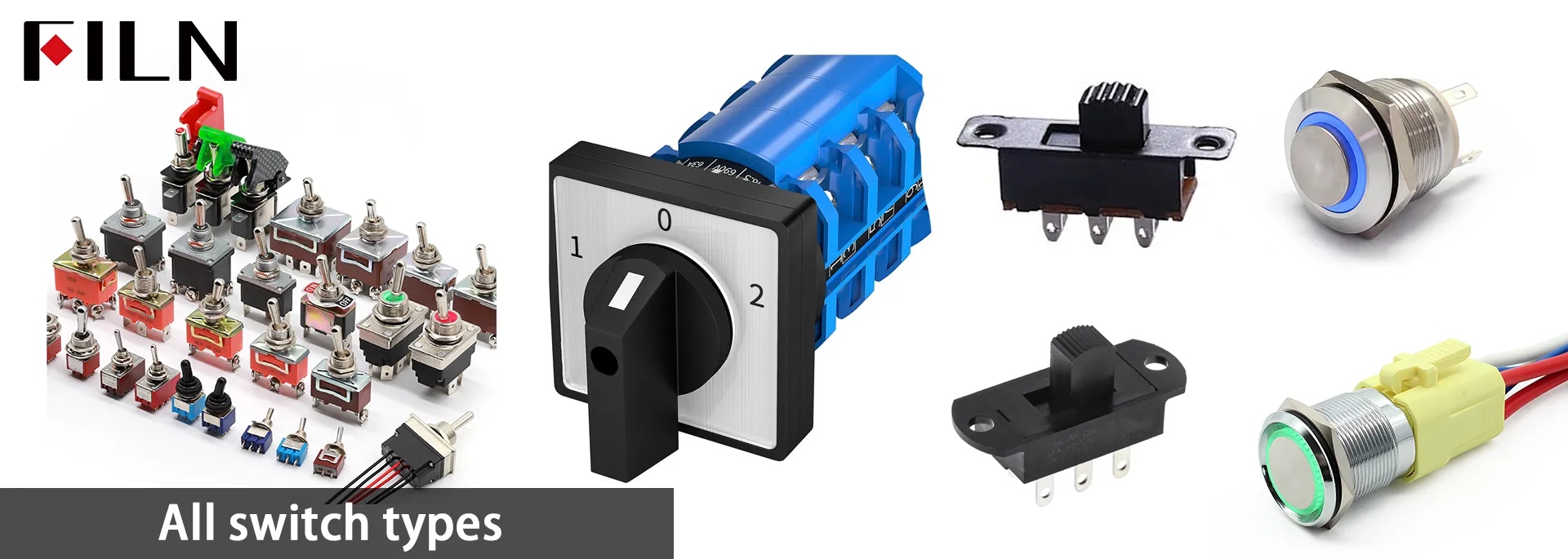
  • Push Button Switch: Common push button switch, the general shape is round, there are latching push button switch and momentary push button switch these two kinds of functions.FILN is a professional manufacturer of push button switch, and also supports the customized production service for customers, to provide you with 100+ different appearance of the push button switch.
  • Toggle Switches: These are the classic switches you flip up and down, commonly found in light switches.
  • Rotary Switches: Operated by rotating a knob, often used in dimmer switches and some power tools.
  • Slide Switches: These switches slide from one position to another and are commonly found in smaller electronic devices.

Mechanism and Operation

Regular switches operate through a mechanical action that physically connects or disconnects the electrical circuit. When you flip, rotate, or slide the switch, it moves internal components to complete or break the circuit, allowing or stopping the flow of electricity.

Common Applications

Regular switches are ubiquitous in everyday life. You’ll find them in homes (light switches, appliance controls), vehicles (ignition switches, window controls), and various electronic devices (radios, toys).

push button switch types

3. Introduction to Push Button Switches

Definition and Types

Push button switches are a type of switch activated by pressing a button. They come in two main varieties:

  • Momentary: These switches only remain active while the button is pressed.
  • Latching: These switches stay in their new state (on or off) until the button is pressed again.

Mechanism and Operation

Push button switches operate by pressing the button to complete or break the circuit. The button’s action moves internal contacts to create or disrupt the electrical flow. This simple action can be momentary or latching, depending on the switch design.

Common Applications

Push button switches are commonly used in devices requiring a simple user interface, such as calculators, phones, doorbells, and industrial machinery controls.

4. Key Differences Between Push Button Switches and Regular Switches

Design and Structure

Regular Switches: Typically have a more complex structure with components designed for specific actions (flipping, rotating, sliding). They often have a visible actuator (lever, knob, or slide) that indicates their position.

Push Button Switches: Generally have a simpler, more compact design. The button can be made from various materials, and the overall structure is designed for easy pressing.

Mechanism of Operation

Regular Switches: Operate through mechanical movement that connects or disconnects internal contacts in a linear or rotational manner.

Push Button Switches: Operate by pressing the button, which moves internal contacts vertically to complete or break the circuit.

Functionality

Regular Switches: Offer straightforward on/off control, often with a clear visual indication of their state.

Push Button Switches: Provide momentary or latching action, making them ideal for applications where temporary or toggle-like control is needed.

Applications

Regular Switches: Widely used in residential, automotive, and electronic applications where simple on/off control is sufficient.

Push Button Switches: Commonly found in consumer electronics, industrial machinery, and control panels where ease of use and compact design are essential.

5. Advantages and Disadvantages

Regular Switches

Advantages:

  • Easy to use and understand
  • Durable and reliable for long-term use
  • Available in various designs and types

Disadvantages:

  • Can be bulky
  • Limited to on/off functionality

Push Button Switches

Advantages:

  • Compact and versatile
  • Simple operation with minimal effort
  • Available in momentary and latching types

Disadvantages:

  • May not provide a clear visual indication of state
  • Can wear out with frequent use

Installation and Maintenance

Regular Switches

Regular switches are generally easy to install, especially for common household applications. Maintenance is minimal, usually involving occasional cleaning or replacement if the switch wears out or fails.

Push Button Switches

Push button switches are also straightforward to install. They often come with simple mounting options and require minimal maintenance. However, in high-use scenarios, the button mechanism may need more frequent replacement.

Cost Considerations

Regular Switches

Regular switches are typically cost-effective, with a wide range of options available at various price points. Their cost can vary based on design, materials, and additional features like dimming capabilities.

Push Button Switches

Push button switches can be slightly more expensive due to their design and versatility. Prices vary depending on the type (momentary or latching), materials, and specific application requirements.

Safety and Reliability

Regular Switches

Regular switches are generally safe and reliable, with robust designs that ensure long-term operation. They often include safety features such as childproof covers and grounding.

Push Button Switches

Push button switches are also reliable but may require more frequent checks in high-use environments. Safety features vary but can include sealed designs to prevent dust and moisture ingress.

Discover the essential guide to momentary push button switches. Learn about their definition, types, key features, common applications, advantages, and how to install and maintain them. This comprehensive article also includes a buying guide to help you choose the best switch for your needs. Perfect for those working in consumer electronics, industrial equipment, automotive applications, medical devices, and home automation systems.

6. Technological Advancements

Innovations in Regular Switches

Recent advancements include smart switches that can be controlled remotely via smartphones and integrated with home automation systems. These innovations add convenience and energy efficiency.

Innovations in Push Button Switches

Push button switches have also evolved, with developments such as touch-sensitive buttons, illuminated buttons for better visibility, and wireless options for greater flexibility in placement and use.

7. Conclusion

Understanding the differences between push button switches and regular switches is crucial for choosing the right switch for your needs. Regular switches offer simplicity and reliability, making them ideal for straightforward on/off control in various settings. On the other hand, push button switches provide compactness and versatility, perfect for applications requiring momentary or toggle actions. By considering factors like design, functionality, cost, and safety, you can select the switch that best meets your requirements.

FAQs

  1. What are the main types of regular switches?
    • The main types include toggle switches, rotary switches, and slide switches, each suited for different applications.
  2. Can push button switches be used in high-power applications?
    • Yes, but they need to be specifically designed for high-power applications to ensure safety and reliability.
  3. How do momentary and latching push button switches differ?
    • Momentary switches remain active only while pressed, while latching switches stay in their new state until pressed again.
  4. Are push button switches more expensive than regular switches?
    • They can be slightly more expensive due to their design and versatility, but prices vary based on specific features and applications.
  5. What safety features should I look for in a switch?
    • Look for features like childproof covers, grounding, and sealed designs to prevent dust and moisture ingress for enhanced safety and reliability.
Fill out my online form.

Understanding the Momentary Push Button Switch: A Comprehensive Guide

1. Introduction

A momentary push button switch is an essential component in various electronic and mechanical systems. This type of switch is designed to maintain its state only while it is being pressed, making it ideal for applications where temporary activation is required. Commonly referred to as a temporary push button or non-latching switch, this device is integral in consumer electronics, industrial machinery, automotive systems, and more.

In this article, we will delve into the definition, types, key features, and specifications of momentary push button switches. We will also explore their common applications, advantages, installation and maintenance tips, and provide a comprehensive buying guide. Our aim is to equip you with all the necessary information to understand and effectively use these switches in your projects.

momentary and latching push button switch

2. What is a Momentary Push Button Switch?

The term “momentary” refers to the switch’s ability to remain in its active state only while being pressed. Once the pressure is released, the switch returns to its default position. This characteristic differentiates momentary switches from latching switches, which maintain their state until manually reset.

A momentary push button switch operates by completing or breaking an electrical circuit when pressed. This basic operation is crucial in scenarios where brief, on-demand activation is needed, such as in doorbells, keyboards, and control panels.

here is a table comparing the momentary push button switch and the latching push button switch:

Feature Momentary Push Button Switch Latching Push Button Switch
Definition A switch that stays active only while being pressed A switch that stays in its new state until pressed again
Operation Returns to its default position once released Changes state with each press (toggle)
Common Uses Doorbells, keyboards, control panels Light switches, power switches, mode selectors
Circuit State Temporary connection or disconnection Maintains connection or disconnection until next press
Energy Consumption Consumes power only when pressed May consume power in both states, depending on application
Design Complexity Generally simpler design Often more complex design
User Interaction Requires continuous holding to stay active Requires a single press to change state
Typical Applications Push-to-talk buttons, start buttons, reset buttons Toggle switches, on/off power switches
Mechanical Structure Spring mechanism to return to default state Mechanical or electronic latch to maintain state
Durability Usually designed for high-frequency use Durability varies based on application and usage frequency

3. Types of Momentary Push Button Switches

  1. Normally Open (NO) Switches
    • Description and Common Uses: A normally open momentary switch remains in an open (off) state until it is pressed, closing the circuit and allowing current to flow. These switches are commonly found in applications like push-to-talk buttons in communication devices and start buttons in machinery.
    • SEO Focus: “normally open momentary switch”
  2. Normally Closed (NC) Switches
    • Description and Common Uses: In contrast, a normally closed momentary switch stays closed (on) until pressed, opening the circuit and stopping the current flow. They are often used in safety systems and emergency stop controls.
    • SEO Focus: “normally closed momentary switch”
  3. Double Throw (DT) Switches
    • Description and Common Uses: Double throw momentary switches can connect to two different circuits, changing the connection from one to another when pressed. This type is useful in applications requiring the toggling between two states, such as in alternating between two lights.

4. Key Features and Specifications

When selecting a momentary push button switch, several key features and specifications should be considered:

  • Material and Build Quality: High-quality materials ensure durability and reliability, especially in demanding environments.
  • Electrical Ratings: The switch’s voltage and current ratings must match the requirements of the application to prevent damage and ensure safe operation.
  • Environmental Resistance: Look for switches with waterproof and dustproof ratings (e.g., IP67) for use in harsh conditions.
  • Actuation Force and Travel: The force required to press the switch and the distance it travels can affect usability and user experience.
  • Durability and Lifecycle: Check the expected lifecycle of the switch, especially for applications involving frequent use.
  • SEO Focus: Integrate terms like “momentary push button specifications” and “push button switch features”.

5. Common Applications

Momentary push button switches are versatile components used in various applications, including:

  • Consumer Electronics: Found in devices like calculators, remote controls, and gaming controllers.
  • Industrial Equipment: Used in control panels, machinery start/stop buttons, and emergency stops.
  • Automotive Applications: Commonly used in horn buttons, dashboard controls, and ignition systems.
  • Medical Devices: Essential in diagnostic equipment and emergency signaling devices.
  • Home Automation Systems: Utilized in smart home controls and automation setups.
Discover the essential guide to momentary push button switches. Learn about their definition, types, key features, common applications, advantages, and how to install and maintain them. This comprehensive article also includes a buying guide to help you choose the best switch for your needs. Perfect for those working in consumer electronics, industrial equipment, automotive applications, medical devices, and home automation systems.

6. Advantages of Using Momentary Push Button Switches

Momentary push button switches offer several advantages:

  • Energy Efficiency: These switches consume power only when pressed, making them energy-efficient.
  • Ease of Use and Simplicity: Their straightforward operation makes them easy to use in a variety of applications.
  • Reliability and Longevity: High-quality switches are designed for long-term use and can withstand frequent pressing.
  • Versatility: Available in various designs and configurations to suit different needs.
  • SEO Focus: Highlight benefits with phrases like “advantages of momentary push button switch” and “benefits of non-latching switch”.

7. Installation and Maintenance Tips

Proper installation and maintenance are crucial for the optimal performance of momentary push button switches:

  • Wiring and Connection: Ensure proper wiring and secure connections to prevent malfunctions.
  • Voltage and Current Compatibility: Match the switch’s ratings with the application’s requirements.
  • Regular Inspection and Cleaning: Periodically inspect and clean the switches to prevent dirt and debris buildup.
  • Troubleshooting Common Issues: Learn to identify and fix common issues like intermittent operation or stuck buttons.
  • SEO Focus: Include keywords like “installing momentary push button switch” and “maintaining push button switch”.

8. Buying Guide

When purchasing a momentary push button switch, consider the following factors:

  • Brand Reputation: Opt for reputable brands known for quality and reliability.
  • Specifications: Ensure the switch meets the specific requirements of your application.
  • Popular Brands and Manufacturers: Research popular brands and read reviews to make an informed decision.
  • Price Range and Value for Money: Compare prices and assess the value based on features and quality.
  • SEO Focus: Use terms like “buying guide for momentary push button” and “best momentary push button switch”.

9. Conclusion

Momentary push button switches are vital components in numerous applications due to their temporary activation feature. Their versatility, reliability, and ease of use make them suitable for a wide range of purposes. Whether you’re working on a consumer electronic device, an industrial machine, or a home automation system, understanding the different types and specifications of these switches can help you choose the right one for your needs.

Explore our detailed guides and resources to learn more about momentary push button switches and how they can enhance your projects. For more information or to purchase high-quality switches, visit our website today.